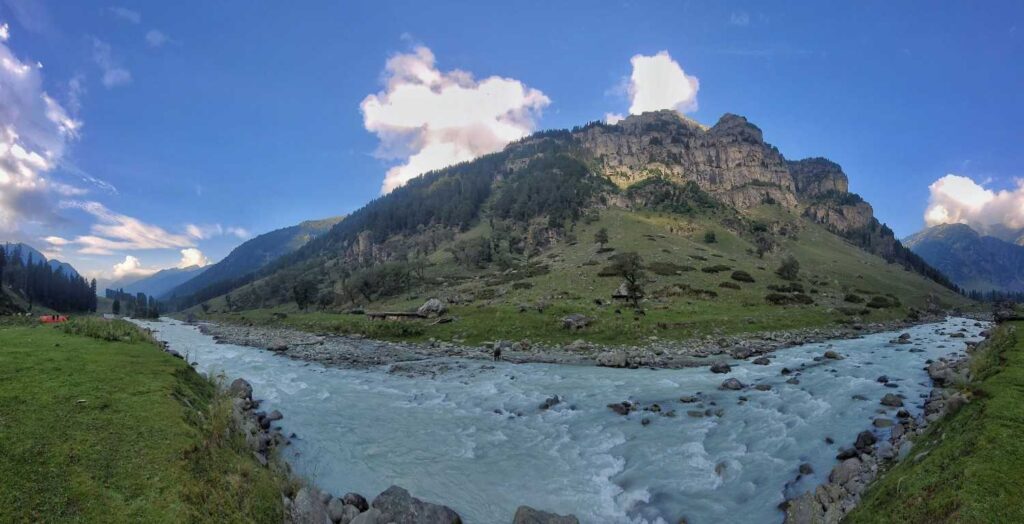
The Kashmir Great Lakes Trek is widely regarded as India’s most breathtaking alpine trek, combining turquoise glacial lakes, sweeping meadows, snow-clad passes, and dramatic Himalayan landscapes into a single unforgettable journey. In this comprehensive guide, we present the complete route breakdown, detailed itinerary, planning essentials, fitness preparation, gear checklist, and insider tips to help you conquer this iconic Himalayan trail with confidence.
Overview of the Kashmir Great Lakes Trek
The Kashmir Great Lakes Trek (KGL Trek) stretches across the stunning alpine region of the Kashmir Valley in Jammu & Kashmir. This 7-day to 9-day high-altitude trek connects multiple pristine glacial lakes nestled between rugged mountain ranges.
- Region: Kashmir Valley, India
- Starting Point: Sonamarg
- Ending Point: Naranag
- Maximum Altitude: ~13,800 ft (Gadsar Pass)
- Total Distance: Approx. 70–75 km
- Difficulty Level: Moderate to Difficult
- Best Time: July to September
We traverse seven major alpine lakes, lush meadows, and high-altitude passes that offer panoramic views of snow-capped peaks and vast valleys.
Detailed Route Map of the Kashmir Great Lakes Trek
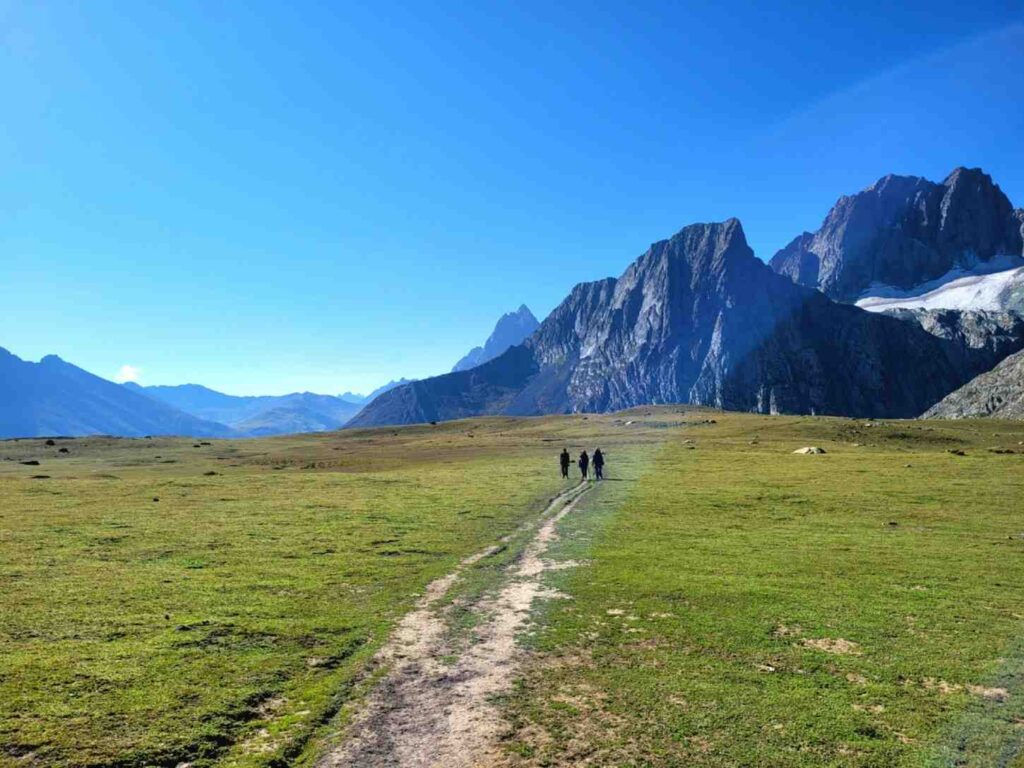
The trek traditionally begins from Sonamarg and concludes at Naranag, forming a stunning cross-valley route through the Himalayan landscape.
Key Lakes Covered on the Trek
- Vishansar Lake
- Krishansar Lake
- Gadsar Lake
- Satsar Lakes
- Gangbal Lake
- Nundkol Lake
Each lake reflects varying hues of emerald, sapphire, and deep turquoise, depending on sunlight and weather conditions.
Day-Wise Itinerary of Kashmir Great Lakes Trek
Day 1: Sonamarg to Nichnai (Approx. 11 km)
We begin the ascent from Sonamarg through rolling meadows and pine forests. The trail gradually climbs toward Nichnai Valley, offering stunning views of the surrounding ridgelines. Campsite altitude reaches approximately 11,500 ft.
Day 2: Nichnai to Vishansar Lake (12 km)
Crossing the Nichnai Pass (13,100 ft), we descend into a valley adorned with vibrant alpine flowers. The first major lake, Vishansar, greets us with crystal-clear waters and grazing sheep flocks.
Day 3: Vishansar to Gadsar via Krishansar (14 km)
This day includes the trek’s highest point — Gadsar Pass (13,800 ft). En route, we pass the mesmerizing Krishansar Lake. Snow patches often linger here even in mid-summer. The descent leads to Gadsar Lake, one of the most picturesque lakes on the trail.
Day 4: Gadsar to Satsar (9 km)
The route winds through vast alpine landscapes before reaching the cluster of Satsar Lakes. These interconnected lakes shimmer under the open Himalayan sky.
Day 5: Satsar to Gangbal Twin Lakes (12 km)
A scenic ridge walk brings us to the majestic twin lakes — Gangbal and Nundkol — located at the base of Mount Harmukh. This campsite is widely considered the most scenic of the entire trek.
Day 6: Gangbal to Naranag (11 km)
We descend through dense pine forests and stone-paved trails leading to the historic Naranag temple ruins, marking the end of the trek.
Best Time to Do the Kashmir Great Lakes Trek
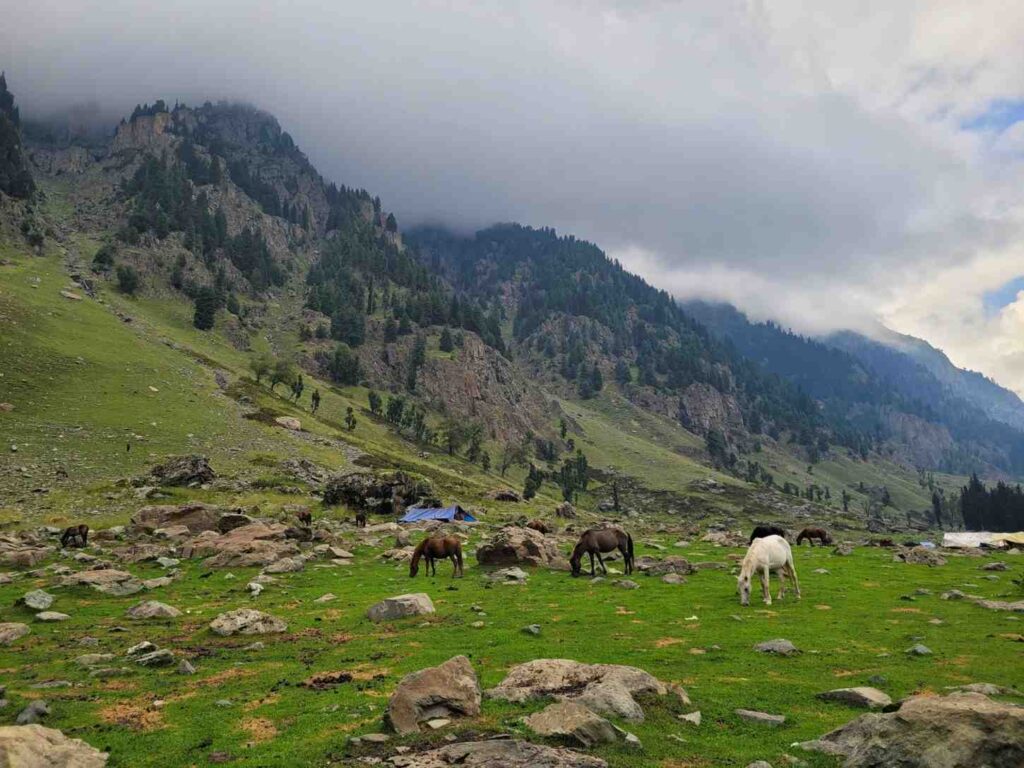
The ideal trekking window is from early July to mid-September.
- July: Snow patches, blooming wildflowers
- August: Lush green meadows, clear lake reflections
- September: Crisp weather, golden alpine landscapes
Outside this period, heavy snowfall blocks high-altitude passes.
Difficulty Level and Fitness Requirements
The Kashmir Great Lakes Trek difficulty level is moderate to difficult due to:
- Long trekking hours (6–8 hours daily)
- Steep ascents and descents
- High altitude above 13,000 ft
We recommend at least 6–8 weeks of physical preparation, focusing on:
- Cardiovascular endurance
- Leg strength training
- Stair climbing and brisk walking
- Core strengthening exercises
A strong fitness foundation ensures safer altitude adaptation and sustained stamina.
Complete Packing List for Kashmir Great Lakes Trek
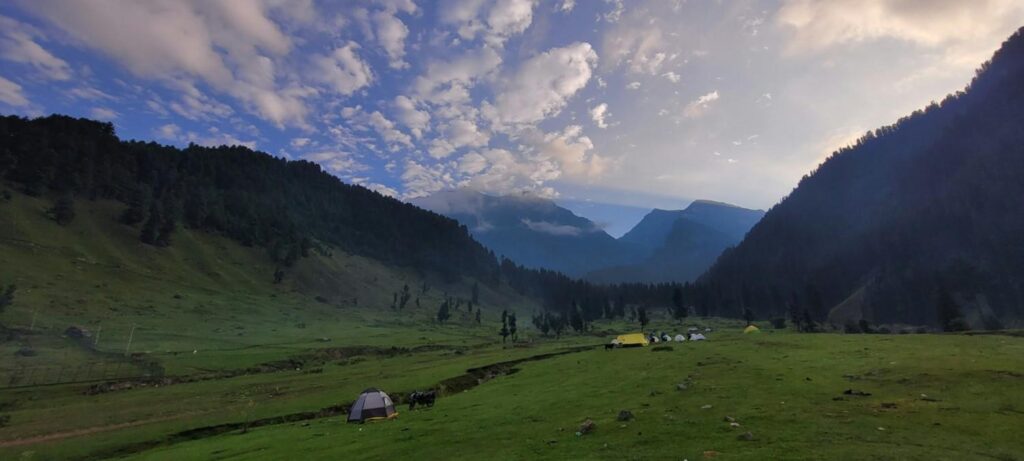
Proper gear selection is crucial for comfort and safety.
Clothing Essentials
- Waterproof trekking jacket
- Insulated down jacket
- Thermal base layers
- Quick-dry trekking pants
- Woolen gloves and cap
- UV-protection sunglasses
Footwear
- High-ankle waterproof trekking shoes
- Moisture-wicking socks
Accessories
- 50–60L backpack
- Trekking poles
- Headlamp
- Personal medical kit
- Sunscreen (SPF 50+)
Weather shifts rapidly in the Himalayas; layering is essential for temperature control.
Altitude and Acclimatization Tips
At elevations above 10,000 ft, acclimatization becomes critical.
- Stay hydrated (3–4 liters daily)
- Avoid alcohol and smoking
- Maintain steady trekking pace
- Recognize symptoms of Acute Mountain Sickness
Proper acclimatization minimizes health risks and enhances trekking performance.
Permits and Documentation
Trekkers must obtain necessary permits through registered trekking operators or local authorities. Identification proof is mandatory. Environmental regulations prohibit littering and mandate responsible camping practices.
Why the Kashmir Great Lakes Trek Is India’s Most Scenic Trek
Unlike single-lake Himalayan treks, this route connects multiple alpine lakes within a single expedition. The landscape transitions daily — from lush valleys to high mountain passes to reflective glacial lakes — delivering unmatched diversity in terrain and visual appeal.
We witness:
- Rolling meadows carpeted with wildflowers
- Dramatic ridgelines and snow bridges
- Shepherd settlements (Bakarwal communities)
- Mirror-like lakes reflecting towering peaks
Every day unfolds a distinct panorama, making the experience dynamic and immersive.
How to Reach the Starting Point
The nearest airport is Srinagar. From Srinagar:
- 2–3 hour drive to Sonamarg
- Private taxis and shared transport available
We recommend arriving one day prior for acclimatization.
Essential Planning Tips
- Book with a certified trekking company for logistical support
- Carry sufficient cash (remote regions lack ATMs)
- Keep buffer days for weather disruptions
- Ensure travel insurance covers high-altitude trekking
- Follow Leave No Trace principles
Photography Highlights
The best sunrise and sunset reflections are typically visible at:
- Vishansar Lake
- Krishansar Lake
- Gangbal Twin Lakes
Golden hour enhances the lakes’ vivid colors and mountain reflections.
Final Thoughts
The Kashmir Great Lakes Trek stands as a masterpiece of Himalayan trekking — combining altitude challenge, natural grandeur, and cultural richness into a single expedition. With proper planning, disciplined fitness preparation, and the right gear, we unlock one of India’s most spectacular alpine adventures.
This complete guide equips us with everything required to confidently plan, prepare, and conquer the trek — transforming a Himalayan dream into a remarkable achievement.
1. What is the best time to do the Kashmir Great Lakes Trek for clear views and pleasant weather?
The best time to do the trek is July to September.
July: Snow patches, lush green meadows, blooming wildflowers.
August: Peak beauty – crystal-clear lakes, green valleys, best photography conditions.
September: Golden-brown landscapes, fewer crowds, colder nights but very scenic.
Avoid June (heavy snow blocks passes) and October onwards (extreme cold and route closure).
2. How difficult is the Kashmir Great Lakes Trek, and what level of fitness is required?
The trek is considered moderate to difficult.
Total distance: ~70–75 km
Duration: 7–8 days
Highest altitude: ~13,800 ft (Gadsar Pass)
Longest trekking day: 10–12 km with steep ascents
Fitness Requirement:
Able to jog 5 km in 30–35 minutes
Good stamina and leg strength
Basic experience of at least one moderate trek is recommended
First-time trekkers can do it with proper preparation.
3. What is the total distance, duration, and altitude of the Kashmir Great Lakes Trek?
Distance: 70–75 km
Duration: 7–8 days
Starting altitude: ~7,800 ft (Sonamarg)
Highest point: Gadsar Pass (~13,800 ft)
Ending point: Naranag (~7,450 ft)
The trek involves crossing 3–4 high mountain passes and multiple alpine lakes.
4. What are the major highlights and lakes covered during the trek?
Major Lakes Covered:
Vishansar Lake – First major alpine lake surrounded by meadows.
Krishansar Lake – Twin lake of Vishansar, extremely scenic.
Gadsar Lake – Known as the “Lake of Flowers.”
Satsar Lakes – A group of seven interconnected lakes.
Gangbal Lake – The largest and most stunning lake at the base of Mt. Harmukh.
Nundkol Lake – Twin lake near Gangbal.
The trek offers changing landscapes daily — snow bridges, grasslands, river crossings, and mountain passes.
5. What permits and documents are required?
Valid Government ID (Aadhar / Passport / Voter ID)
Medical fitness certificate (mandatory for most trek operators)
Trek operator usually arranges forest permissions
If trekking independently, you may need local permission from Sonamarg authorities.
6. What should be included in the packing list?
Essential Packing List:
Clothing:
2 quick-dry trekking pants
3–4 moisture-wicking T-shirts
Down jacket
Fleece jacket
Waterproof jacket & poncho
Thermal innerwear
Woolen cap & gloves
Gear:
50–60L backpack
Trekking shoes (water-resistant)
Trekking poles
Sunglasses (UV protection)
Sunscreen (SPF 50+)
Personal medicines
Avoid overpacking — weight management is crucial.
7. How much does the trek cost, and what is included?
Average Cost: ₹12,000 – ₹18,000 (with a trekking company)
Usually includes:
Camping accommodation
Meals (veg)
Trek leader & support staff
Permits
First-aid support
Excludes:
Travel to Srinagar
Personal expenses
Porter charges (extra)
Independent trekking may cost less but requires planning.
8. Is it safe for solo travelers and first-time trekkers?
Yes, if done with a reputed trek operator.
The route is remote but well-known.
Mobile network is limited after Day 1.
Weather changes quickly — follow the trek leader’s instructions.
AMS (Altitude Mountain Sickness) risk exists — acclimatization is important.
For solo trekkers, joining a group is safer than going completely alone.
9. What kind of accommodation and food can trekkers expect?
Accommodation:
Twin-sharing alpine tents
Sleeping bags & mats provided by organizers
Common dining tent
Food:
Simple vegetarian meals
Breakfast (porridge, bread, tea)
Lunch (packed or hot meal)
Dinner (dal, rice, roti, vegetables)
Evening snacks & soup
Do not expect luxury — it’s a pure camping experience.
10. How can travelers reach the base camp from Srinagar?
Nearest Airport: Srinagar International Airport
From Srinagar to Sonamarg: 80 km (2.5–3 hours by taxi)
Trek usually starts from Sonamarg and ends at Naranag
From Naranag, shared taxis are available back to Srinagar
Most trek companies arrange pick-up and drop services.
